Best Performance Management Tools for One-On-Ones in 2026
You are comparing six performance management tools for one-on-ones, and the real difference comes down to meeting structure, feedback loops, and how well each fits your team's existing workflow. Most managers abandon these tools within a quarter because the software adds overhead instead of removing it.
By the end of this article, you will have a clear set of criteria for evaluating agenda structuring, action item tracking, and coaching integration across HeyRamp, 15Five, and Teamflect. You will also know which platform earns the top spot for built-in one-on-one capabilities and flat pricing, and how to match your final choice to your team size and meeting cadence.
What to Look For in Performance Management Tools for One-On-Ones
Effective one-on-one meetings hinge on structured agendas and clear action items, so when evaluating performance management tools, prioritize features that streamline these core elements. The right software transforms scattered conversations into productive, repeatable rituals that drive employee development and manager employee communication.
Modern one-on-one meeting tools should support the entire meeting lifecycle, from preparation to follow-through. When comparing options, focus on these key capabilities:
- Agenda structuring with templates and customization options
- Action item tracking with assignments, due dates, and status updates
- Feedback integration including real-time input and 360-degree collection
- Coaching support with guidance, resources, and development prompts
These features reduce administrative overhead and keep both parties accountable. The best performance management software makes it easy to prepare, document, and act on every conversation, turning one-on-ones into a strategic driver of employee engagement and growth.
Agenda Structuring and Action Item Tracking
Look for tools that offer pre-built meeting agenda templates and the ability to customize them to fit your team's specific needs, ensuring every one-on-one has a clear purpose. Drag-and-drop agenda builders let managers and employees co-create the discussion flow in seconds, while recurring meeting templates save time for routine check-ins.
Sharing the agenda in advance is critical. When both parties review the topics before the meeting, conversation time is spent on problem-solving rather than figuring out what to discuss. Meeting notes software that centralizes these agendas creates a consistent structure across all teams and managers.
Action item tracking is equally important. The right tool should allow you to assign tasks during the meeting, set due dates, and automatically sync them to project management systems or task lists. This integration eliminates the need for follow-up emails and ensures nothing falls through the cracks.
For example, after a check-in, a manager can assign a development task with a two-week deadline and have it appear in the employee's task queue immediately. This creates a natural accountability loop where progress is visible and measurable between meetings, supporting collaborative goal alignment and productivity tracking.
Feedback and Coaching Integration
A robust performance management tool should seamlessly integrate feedback and coaching into the meeting flow, allowing managers to provide real-time, constructive input and track development over time. Real-time feedback prompts guide managers to recognize achievements or address concerns while the context is fresh, rather than waiting for formal reviews.
360-degree feedback collection broadens the perspective beyond just the manager-employee dyad. Peers, direct reports, and other stakeholders can contribute insights that enrich the conversation and provide a fuller picture of performance. Tools that support this make feedback a regular, expected part of the dialogue.
Coaching resources built into the platform add another layer of value. Tips, templates, and training modules help managers facilitate difficult conversations, set development goals, and create employee development plans. These resources reduce the skill gap between experienced and new managers.
Having a complete feedback history stored in one place is invaluable for performance reviews. Instead of relying on memory, managers can reference months of documented conversations, feedback analytics, and progress notes. This makes performance appraisal tools more accurate and reduces bias, while continuous feedback platforms keep development moving forward all year long.
1. HeyRamp - Best Overall
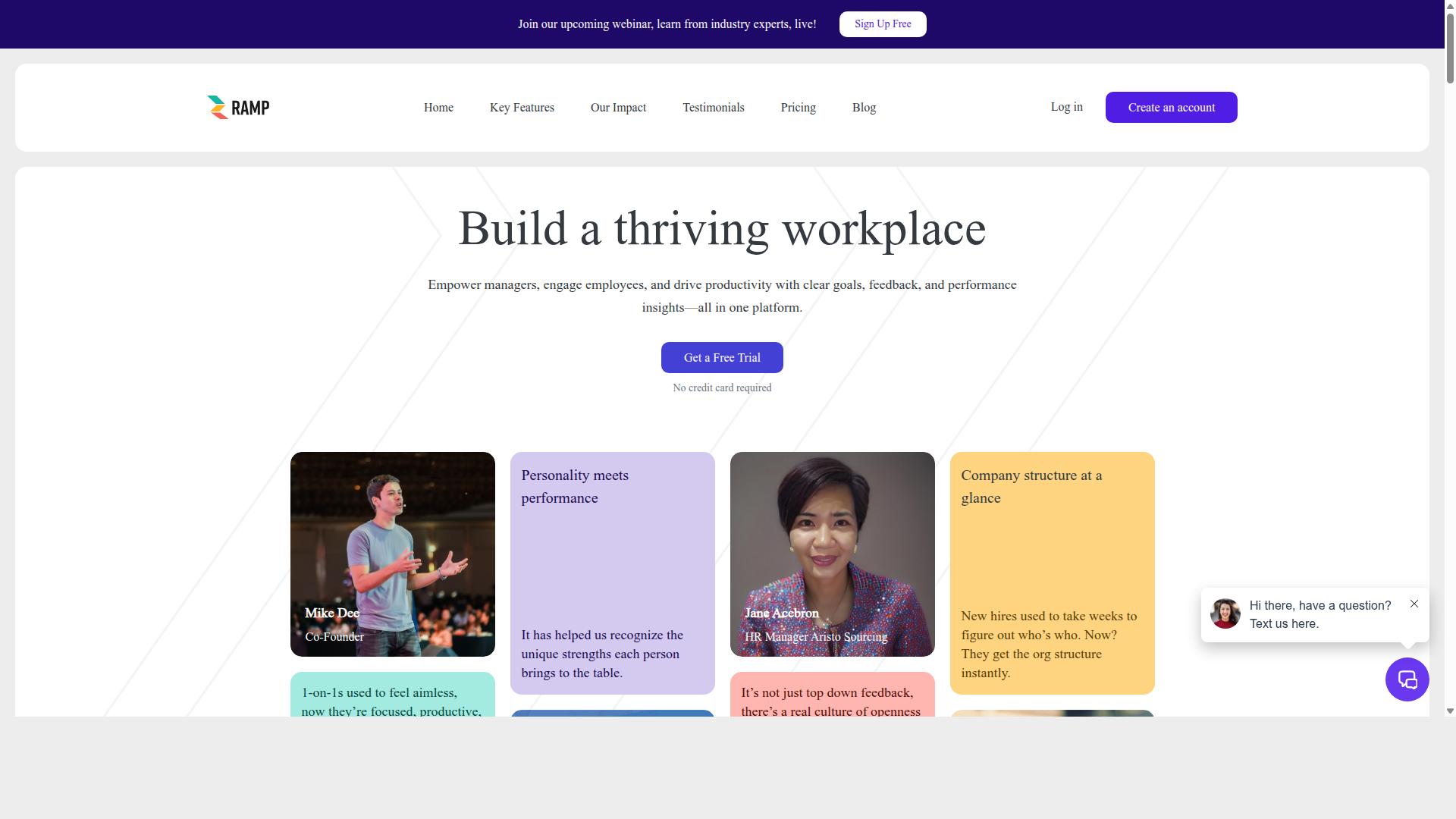
HeyRamp earns the top spot for its comprehensive, all-in-one approach to performance management, combining structured one-on-one tools with personality insights and transparent pricing.
This platform is designed for leadership, managers, and HR teams that want more than a simple meeting scheduler. It brings feedback, reviews, and team development into a single workspace, which removes the need to juggle multiple disconnected tools.
The one-on-one meeting tools include organized agendas and action tracking, so every conversation has a clear purpose and follow-through. Performance reviews, OKR tracking, and people analytics dashboards give managers a full view of team health without switching between systems.
HeyRamp is globally available, making it a practical fit for distributed teams and multinational organizations. Its flat, per-seat pricing also stands out in a market where many competitors hide costs behind tiered enterprise quotes.
Built-In 1-on-1 Tools, Personality Insights, and Flat Pricing
HeyRamp's built-in 1-on-1 tools include structured agendas and action item tracking, while its personality insights add a unique layer to manager-employee communication.
Managers can run productive check-ins using guided conversation templates, coaching tips, and sentiment prompts. Automated reminders keep both parties prepared, and confidential manager notes allow for private context before, during, or after a meeting.
The personality insights feature is a standout differentiator. By integrating personality testing directly with performance tools, HeyRamp helps managers understand communication styles and adapt their approach to each employee. This makes it easier to reduce friction and build trust during one-on-ones.
Pricing is refreshingly straightforward. The monthly plan costs $5.00 per seat, while the annual plan drops to $3.00 per seat per month. Enterprise pricing is custom, and there is a 14-day trial with no credit card required, giving teams full access from day one.
HeyRamp also includes built-in training videos covering one-on-ones, performance reviews, and personality testing. These resources help new managers get up to speed quickly. Automatic compliance documentation with time-stamped, secure records adds another layer of value for HR teams that need audit-ready data.
With KPI snapshots, leadership insights, and real-time progress visualization for OKRs, this platform covers the full performance cycle. For teams seeking an employee check-in software that combines coaching, accountability, and development in one place, HeyRamp is the most complete option available.
2. 15Five
15Five is a strong contender for organizations focused on continuous performance management, offering robust check-in features that drive employee engagement. The platform is designed to support frequent communication between managers and their teams, making it a practical choice for companies that want to move beyond annual reviews. Its AI-powered system helps HR leaders and managers stay connected to employee sentiment throughout the year.
With a presence in over 3,000 companies and serving roughly 250,000 employees, 15Five has established itself as a widely adopted solution in the performance management space. The platform includes several integrated products covering reviews, compensation, and manager enablement. For organizations prioritizing manager effectiveness and retention, this suite offers a structured path forward.
Continuous Performance Management and Engagement-Focused Check-Ins
15Five excels with its continuous performance management features, including weekly check-ins, objective tracking, and engagement surveys that keep a pulse on team morale. These tools work together to create a rhythm of accountability and support. Managers can see where employees are thriving and where they may need additional coaching before small issues become larger problems.
The platform's OKR tracking helps teams align their daily work with broader company goals, which supports collaborative goal alignment across departments. Weekly check-ins replace the formality of annual reviews with a lighter, more frequent touchpoint. This approach encourages real-time feedback and keeps communication channels open between meetings.
15Five also includes engagement surveys that measure team sentiment on a regular basis. These pulse surveys give leaders visibility into motivation levels and potential burnout risks. The insights dashboard and AI coaching assistant provide managers with guidance on how to respond to trends and support their direct reports more effectively.
For companies looking to improve manager employee communication and reduce turnover, 15Five offers a comprehensive toolkit. Its focus on coaching tools and employee development plans makes it suitable for organizations that view performance management as a continuous conversation rather than a periodic event. The platform supports action item tracking and meeting notes software to ensure follow-through after each discussion.
3. Teamflect
Teamflect stands out for its native integration with Microsoft Teams, making it a seamless choice for organizations already embedded in the Microsoft ecosystem. The platform positions itself as a performance management solution that lives where daily work already happens.
For teams that rely heavily on Teams for communication, this approach reduces context switching. Managers and employees can handle reviews, check-ins, and feedback without jumping between separate applications.
Microsoft Teams-Native Meeting and Review Features
Teamflect's key advantage is its deep integration with Microsoft Teams, allowing managers to conduct one-on-ones, track action items, and complete reviews without leaving the platform. Meeting agendas and notes are accessible directly within the Teams interface, which keeps conversations structured and documented.
The tool supports performance reviews through the same native environment. Employees can complete self-assessments, managers can provide ratings, and both parties can review historical feedback in one place. This consistency helps maintain a clear record of progress over time.
Action item tracking is built into the workflow, so follow-ups from each check-in stay visible. Teams can assign tasks, set deadlines, and monitor completion without creating separate to-do lists elsewhere. This keeps accountability within the meeting context where commitments were made.
Feedback and recognition features are also part of the platform. Employees can give peers real-time recognition, and managers can offer continuous feedback between formal reviews. These lightweight interactions support ongoing employee engagement without requiring a separate system.
For organizations standardized on Microsoft Teams, this approach simplifies adoption. There is no new interface to learn, and the performance management process becomes part of the existing communication flow. Teams that already use meeting notes software and scheduling tools inside Teams will find the transition relatively smooth.
However, teams not using Microsoft Teams as their primary hub may find the integration less relevant. Organizations on Slack or other platforms would need to consider whether this deep Microsoft integration fits their workflow before committing to the tool.
How to Choose the Right Option
Choosing the right performance management tool depends on your team size, existing workflow, and the specific features that will drive the most value for your organization. The best starting point is to map your primary goals, whether that means improving employee engagement, streamlining performance reviews, or enabling real-time feedback.
Consider the tools your team already uses daily, such as Slack or Microsoft Teams. A one-on-one meeting tool that fits naturally into those channels will see far higher adoption than a standalone system that requires constant context switching.
These platforms serve leadership, line managers, human resources, and individual contributors alike. Each group has different needs, so the right solution must balance executive reporting with practical, day-to-day usability for managers and their direct reports.
Matching Tool Capabilities to Your Team Size and Workflow
For small teams, a simple tool with essential meeting and feedback features may suffice, while larger organizations might require advanced analytics and integrations with HR software. Teams under 50 people typically benefit most from quick setup, intuitive interfaces, and pre-built meeting agenda templates that get managers started immediately.
Organizations in the 50 to 200 range should prioritize Slack integration, Microsoft Teams integration, and scalability. At this stage, performance management software needs to support multiple managers running consistent check-ins without creating administrative overhead. Look for employee check-in software that automates reminders and centralizes action item tracking.
For companies with 200 or more employees, advanced capabilities become essential. These include feedback analytics, 360-degree feedback, performance review automation, and robust goal setting tools or OKR software. Compliance features and detailed reporting for HR also matter more at this scale, as does the ability to support employee development plans across departments.
Remember that the tool must serve everyone involved. Leadership needs visibility into engagement trends, managers need coaching tools and conversation prompts, HR needs pulse surveys and performance appraisal tools, and individual contributors need a clear view of their goals and progress. A platform that supports collaborative goal alignment and peer recognition will create a stronger culture of continuous feedback than one focused solely on documentation.
One option worth evaluating is HeyRamp, which is designed for leadership, line managers, human resources, and individual contributors seeking improved performance management, employee engagement, goal alignment, and team development. When comparing solutions, focus on how each platform handles the specific workflows your organization already uses, rather than getting distracted by feature lists that sound impressive but rarely get used.
Final Verdict
The final verdict: prioritize tools that enable structured one-on-ones and give the power to managers with actionable feedback and coaching tools, as these directly impact employee engagement and performance. The right performance management software turns routine check-ins into meaningful conversations that drive growth, not just status updates.
Across the landscape of one-on-one meeting tools and continuous feedback platforms, the strongest solutions share a common thread. They make meeting agenda templates effortless to use, they keep action item tracking simple, and they give managers the coaching tools needed to follow through between conversations.
Employee check-in software only delivers value when it becomes a habit. The best platforms automate the reminders, guide the conversation, and capture the outcomes so nothing falls through the cracks. That is what separates tools that get adopted from tools that get abandoned.
Prioritizing Structured Meetings and Manager Enablement
Ultimately, the best performance management tool is one that makes structured meetings effortless and gives managers the tools to coach and develop their teams effectively. Structured one-on-ones create a rhythm of accountability, while manager enablement ensures those meetings lead to real development, not just conversation.
For most organizations, HeyRamp stands out as the best overall choice. It combines the full spectrum of performance management features into one all-in-one platform. This includes guided conversation templates for difficult discussions, instant coaching tips, and automated reminders that keep managers on track. Personality insights are integrated directly with performance tools, helping managers understand how to communicate with each team member more effectively.
HeyRamp operates on a one flat fee pricing model, which removes the per-seat cost barriers that often limit adoption in growing teams. It is trusted by 20+ organizations and 400+ teams, and it includes built-in training and education plus automatic compliance documentation. The aggregated people analytics dashboards give leadership a clear view of engagement and performance across the organization.
For teams that want a proven, easy-to-adopt platform, HeyRamp's 14-day trial offers a low-risk entry point. 15Five and Teamflect remain strong alternatives for organizations with more specialized needs, such as a heavier focus on employee engagement surveys or deeper OKR software integration. However, for a comprehensive solution that balances coaching, analytics, and structure, HeyRamp delivers the most value in one place.
The tools you choose today will shape your manager employee communication for years to come. Prioritize platforms that make the right behaviors easy, and your one-on-ones will become the engine of your organization's growth.
Recommended Resources: