Best WhatsApp Business API Tools for Ecommerce Agencies in 2026
Your agency is probably paying for three WhatsApp tools when one would do. Client accounts multiply, template approvals pile up, and per-message costs quietly eat the retainer you fought to win. That is usually the moment agencies start comparing platforms seriously.
This guide breaks down what ecommerce agencies should actually evaluate: multi-client management, pricing at volume, and scalability across accounts. You will get a criteria checklist, a side-by-side comparison of eight tools including Com.bot, and a clear number one pick for 2026.
What Ecommerce Agencies Should Look For in WhatsApp Business API Tools
As ecommerce agencies scale client operations in 2026, selecting the right WhatsApp Business API tool hinges on five critical capabilities: multi-client management, pricing transparency, integration depth, automation flexibility, and compliance support.
WhatsApp has become a cornerstone of conversational commerce. Research suggests open rates near 98%, far above email, and click-through rates on well-crafted messages often land in the 45% to 60% range. For ecommerce brands, that translates into stronger performance across abandoned cart recovery, order confirmation, shipping notifications, and delivery updates.
But the WhatsApp Business Platform is not a plug-and-play channel. It requires verified business status, approved message templates, and careful opt-in management. Agencies managing multiple clients face an added layer of complexity: each brand needs its own WhatsApp Business account, its own Meta Business Suite configuration, and its own compliance posture.
Choosing the wrong tool creates friction that compounds across every client. Choosing the right one turns WhatsApp into a repeatable, scalable service line. The five criteria below form a practical evaluation framework any ecommerce agency can apply.
1. Multi-client management. The tool must let you manage multiple WhatsApp Business accounts from one dashboard. Look for role-based access so junior staff can handle routine replies while senior strategists control template approvals and billing. White-label options matter if you resell messaging services under your own brand. Without these, agencies end up juggling separate logins per client, which kills efficiency at scale.
2. Pricing transparency. Understand whether the tool charges per-conversation or per-message, and how Meta's own conversation categories (marketing, utility, authentication, service) affect your costs. Watch for hidden fees: setup charges, per-seat pricing, template submission fees, or overage penalties. Model scalability costs before committing. A tool that looks cheap at five clients may become expensive at fifty.
3. Integration depth. Native connectors to Shopify, WooCommerce, Magento, and BigCommerce let you pull order data, trigger shipping notifications, and sync product catalogs without custom code. CRM integration with HubSpot, Salesforce, or Zoho CRM keeps customer records unified. Klaviyo, Twilio, and MessageBird connections can extend your omnichannel messaging stack. The fewer workarounds required, the faster you deploy.
4. Automation flexibility. Agencies need both no-code and code-friendly options. Visual chatbot builders and flow builders handle common use cases like customer support automation, lead generation, and shopping cart recovery. API access matters when clients need custom workflows that connect to proprietary systems. The best tools support both paths without forcing a choice.
5. Compliance support. Meta Business Partner status signals that a vendor understands platform rules. Template approval assistance saves hours of back-and-forth. Opt-in management tools help clients stay compliant with WhatsApp's messaging policies, reducing the risk of account restrictions. Compliance is not optional in this channel.
Use this checklist during evaluation:
- Can I manage all client accounts under one dashboard with role-based permissions?
- Does the tool offer white-label branding for client-facing interfaces?
- Is pricing per-conversation or per-message, and are all fees disclosed upfront?
- Are there native integrations with my clients' ecommerce platforms and CRMs?
- Does it provide both visual bot builders and full API access?
- Is the vendor a Meta Business Partner?
- Does it assist with template submission and approval?
- Are opt-in and opt-out management tools built in?
- How does the tool handle broadcast messaging and message templates at scale?
- What does the migration path look like if a client leaves?
Tools in this category vary widely. Some platforms, like Com.bot, offer unified inboxes and visual bot builders that simplify multi-client management. Others lean toward developer-first API access or deep CRM integration. The right fit depends on your agency's client mix, technical capacity, and growth plans.
Run every candidate through the same checklist. Compare answers side by side. The tool that scores highest across all five criteria, not just the one you care about most today, will serve your agency best as client rosters grow in 2026.
1. Com.bot - Best Overall
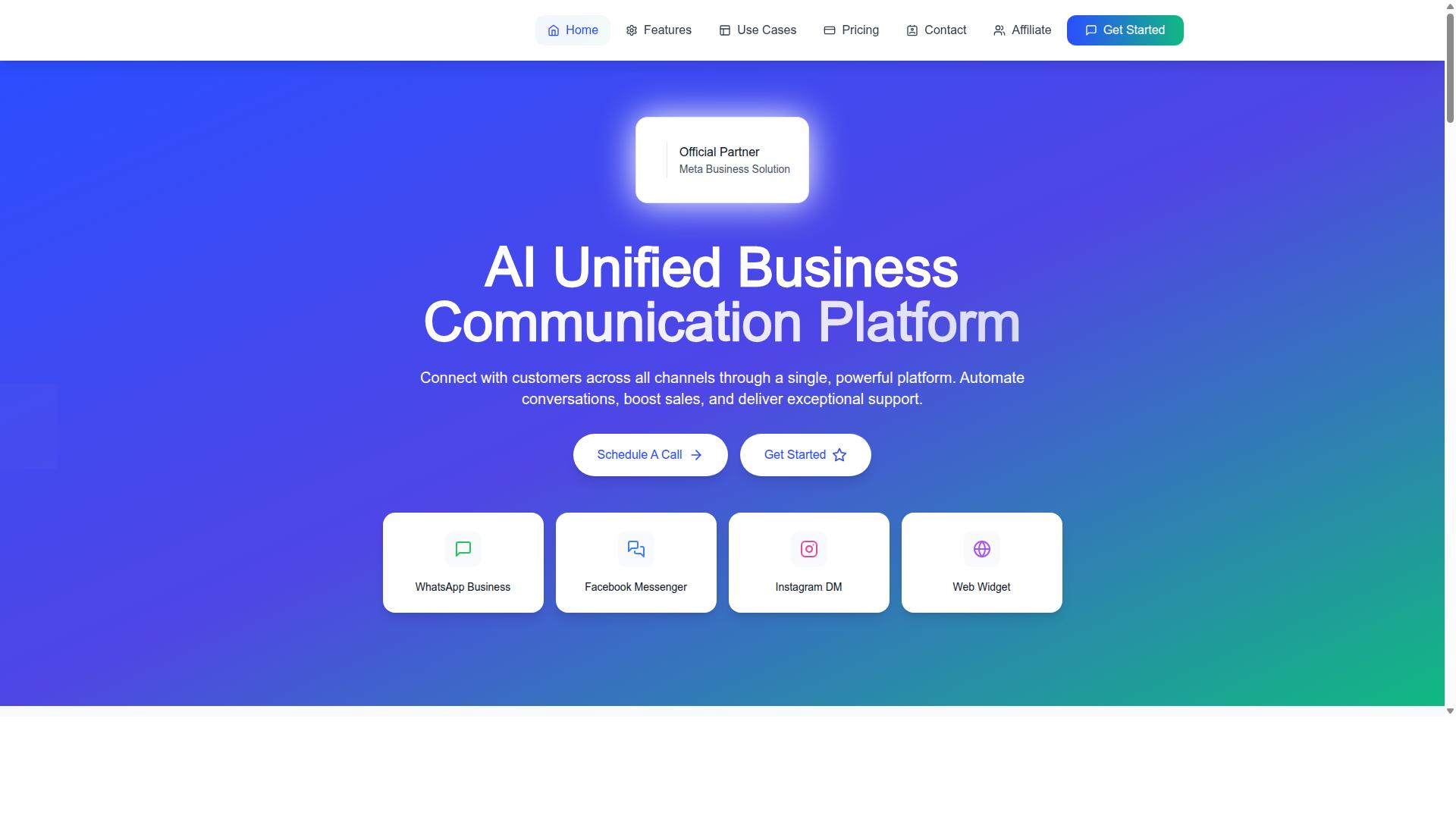
Com.bot stands out as the best overall WhatsApp Business API tool for ecommerce agencies in 2026, combining an AI-powered unified inbox, visual bot builder, and native payments to streamline conversational commerce at scale.
What separates Com.bot from most WhatsApp API tools is its foundation as an official Meta Business Partner. That status matters for agencies because clients depend on stable access to the WhatsApp Business Platform, and partner-level tools are built to operate within Meta's requirements rather than around them.
The scale is also notable. Com.bot supports 23,000+ active customers and processes 25M+ messages daily, which speaks to reliability under real ecommerce workloads. For an agency juggling multiple client accounts, that track record reduces the risk of platform hiccups during peak shopping periods.
Com.bot is available in 50+ countries and pairs enterprise-grade security with multi-channel support across WhatsApp, Facebook, Instagram, and a Web Widget. That combination lets agencies manage omnichannel messaging for every client from one place, instead of stitching together separate tools for each channel.
The sections below break down the specific features, pricing tiers, and integration options that make Com.bot a strong fit for ecommerce agencies managing conversational commerce at scale.
Key Features, Pricing & Why It Leads for Agencies
Com.bot's feature set is purpose-built for ecommerce agencies, enabling automated abandoned cart recovery, order confirmations, and shipping notifications directly within WhatsApp.
Those ecommerce integrations turn WhatsApp into a working sales channel rather than just a support line. An agency can set up shopping cart recovery flows, delivery updates, and payment collection without building custom middleware for each client store.
Beyond commerce, Com.bot covers the operational side of agency work:
- Multi-channel support for WhatsApp, Facebook Messenger, Instagram DM, and Web Widget
- Visual Bot Builder with a drag-and-drop interface for creating flows without coding
- Native Payments for WhatsApp transactions
- Unified Team Inbox for managing conversations across multiple clients
- CRM integrations including HubSpot, Salesforce, and Zoho CRM
- Ecommerce platform integrations including Shopify, WooCommerce, Magento, and BigCommerce
- Broadcast messaging and message templates for promotions
- Analytics and reporting for tracking performance
The Automation Builder extends this further with 1000+ integrations, so agencies can connect client workflows to the tools those businesses already use. Team Collaboration with role-based access helps agencies assign the right people to the right client accounts.
Pricing is structured for agency economics:
| Plan | Price | Best For |
|---|---|---|
| Silver | $149 per quarter | Small agencies or single-client setups |
| Gold (Recommended) | $349 per quarter | Growing agencies managing multiple clients |
| Platinum V1 | $2500 per quarter | Larger operations with heavier volume |
Add-ons run $10 per month for an additional team member, social channel, external actions (per 5000), bot triggers (per 25000), or ecom store. WhatsApp messaging is billed at actual Meta rates with no markup, which keeps client costs predictable.
For an agency managing several ecommerce clients, the Gold Plan is the practical middle ground. It balances cost against the capacity needed to run broadcast messaging, chatbot automation, and customer support automation across accounts without hitting ceilings too quickly.
Consider a typical scenario: a Shopify client wants abandoned cart recovery, order confirmation, and shipping notifications running through WhatsApp. With Com.bot, an agency can build that flow in the Visual Bot Builder and route replies into the Unified Team Inbox. The same setup repeats for a WooCommerce or BigCommerce client with minimal rework.
Dedicated support is available when needed at $49/hour for WABA, CRM, or Inbox help, and $99/hour for ecommerce, bots, or automations. For agencies onboarding new clients, that on-demand expertise can shorten setup time during busy periods.
Taken together, the feature depth, transparent pricing, and agency-friendly structure explain why Com.bot leads this list for ecommerce agencies in 2026.
2. Interakt
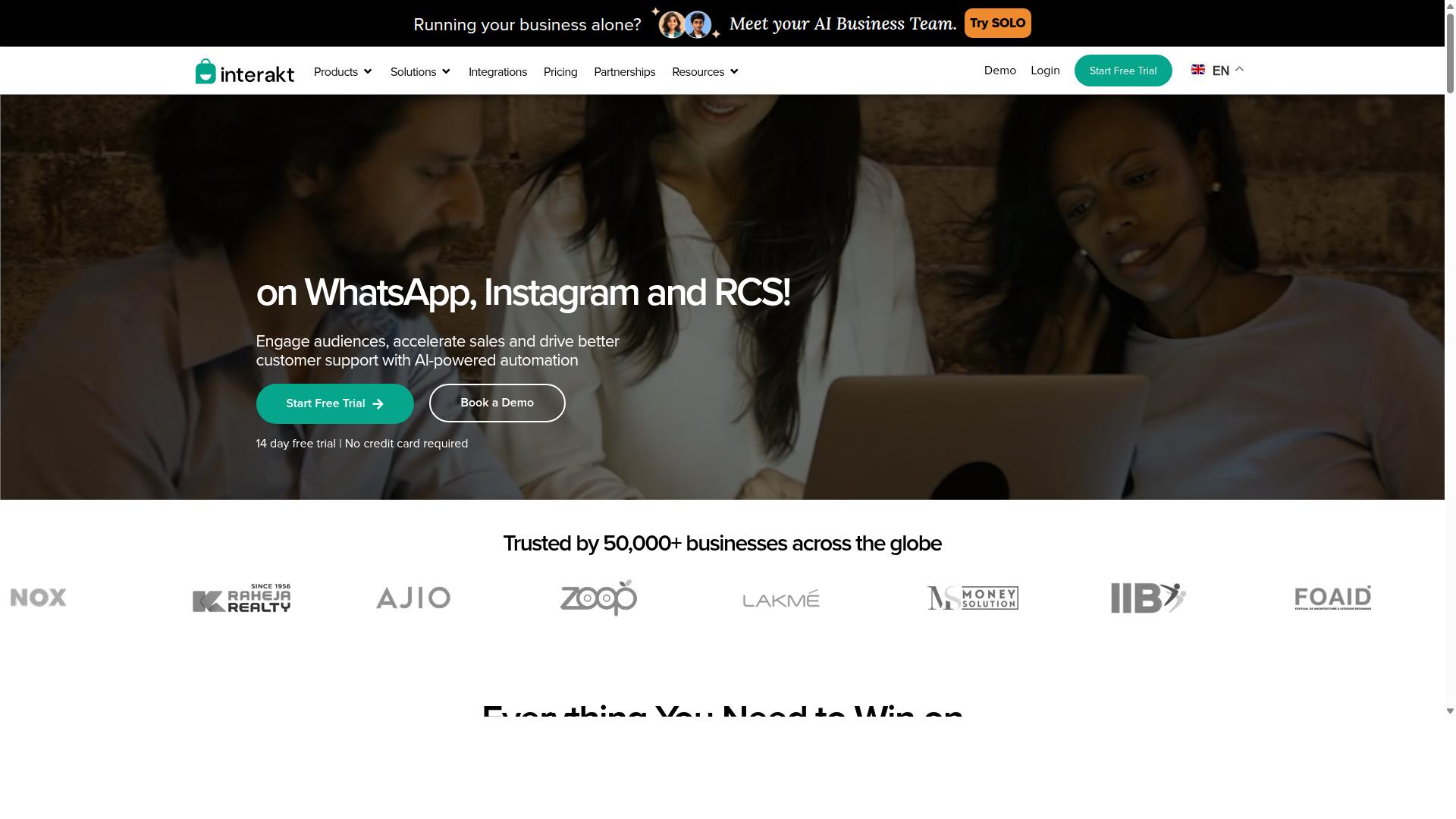
Interakt is a WhatsApp Business API solution popular among small to mid-sized ecommerce businesses for its user-friendly interface and Shopify integration, but agencies should evaluate its multi-client management capabilities carefully.
Positions itself as a WhatsApp marketing app built specifically for Shopify merchants. It handles sales, marketing, and support conversations from a single dashboard, which makes it accessible for teams without deep technical resources. For a single store owner, that focus is a strength.
For ecommerce agencies juggling multiple brands, though, the picture gets more complicated. The platform's design leans toward individual merchants rather than agency workflows, so client isolation, role-based access, and consolidated reporting deserve close inspection before committing.
Shopify integration sits at the center of the product. Store data flows into WhatsApp so that product catalogs, order records, and customer histories stay in sync. That tight coupling reduces manual work for merchants who run everything through Shopify.
Catalog management lets businesses showcase products directly inside a chat. Shoppers can browse items, add them to a cart, and complete a purchase without leaving the conversation. This supports the broader conversational commerce trend that agencies are increasingly asked to deliver.
Abandoned cart recovery is one of Interakt's headline use cases. The tool sends reminders with checkout links, aiming to bring shoppers back before the purchase window closes. Bulk campaigns and automated order updates round out the marketing side.
On the support side, the platform offers a shared team inbox, auto-replies, and basic chatbot automation. It also supports Instagram automation and AI agents. A WhatsApp Blue Tick application service and a chat widget are included as well.
For ecommerce operations, COD double-confirmation stands out as a practical feature. It aims to reduce return-to-origin losses, a common pain point for merchants in markets where cash on delivery dominates. Automated order and shipping notifications keep buyers informed without manual effort.
Pricing follows a subscription model with tiers. Publicly listed plans range from a Starter Plan at "$21" per month or "$180/year" up to a Premier Plan at "$99" per month or "$839/year with Growth and Advanced tiers in between. Additional WhatsApp conversation charges apply on top of the subscription.
That layered cost structure matters for agencies. When you multiply subscription fees and conversation charges across several client accounts, the total can climb quickly. Budgeting per client becomes an exercise in forecasting message volume, not just seat counts.
The strengths are straightforward:
- Ease of use with a quick setup path suited to lean teams
- Native Shopify integration that keeps store data connected
- Ready-made flows for cart recovery, order updates, and COD confirmation
- Accessible entry pricing for single-store merchants
The limitations matter just as much for agencies:
- Limited multi-client management features compared with agency-oriented platforms
- Scalability concerns when managing many client accounts at once
- Tiered pricing plus conversation charges can complicate per-client billing
- Fewer advanced controls for teams needing granular permissions across brands
For CRM integration and omnichannel messaging, agencies often need connections to systems like HubSpot, Salesforce, or Zoho CRM. Interakt's ecosystem leans toward Shopify-centric workflows, so teams with broader stack requirements should map out their needs first.
The practical takeaway: Interakt fits merchants and small agencies running a handful of Shopify stores. Agencies managing dozens of clients with complex reporting and permission needs should test multi-account workflows during a trial before standardizing on it.
3. AiSensy
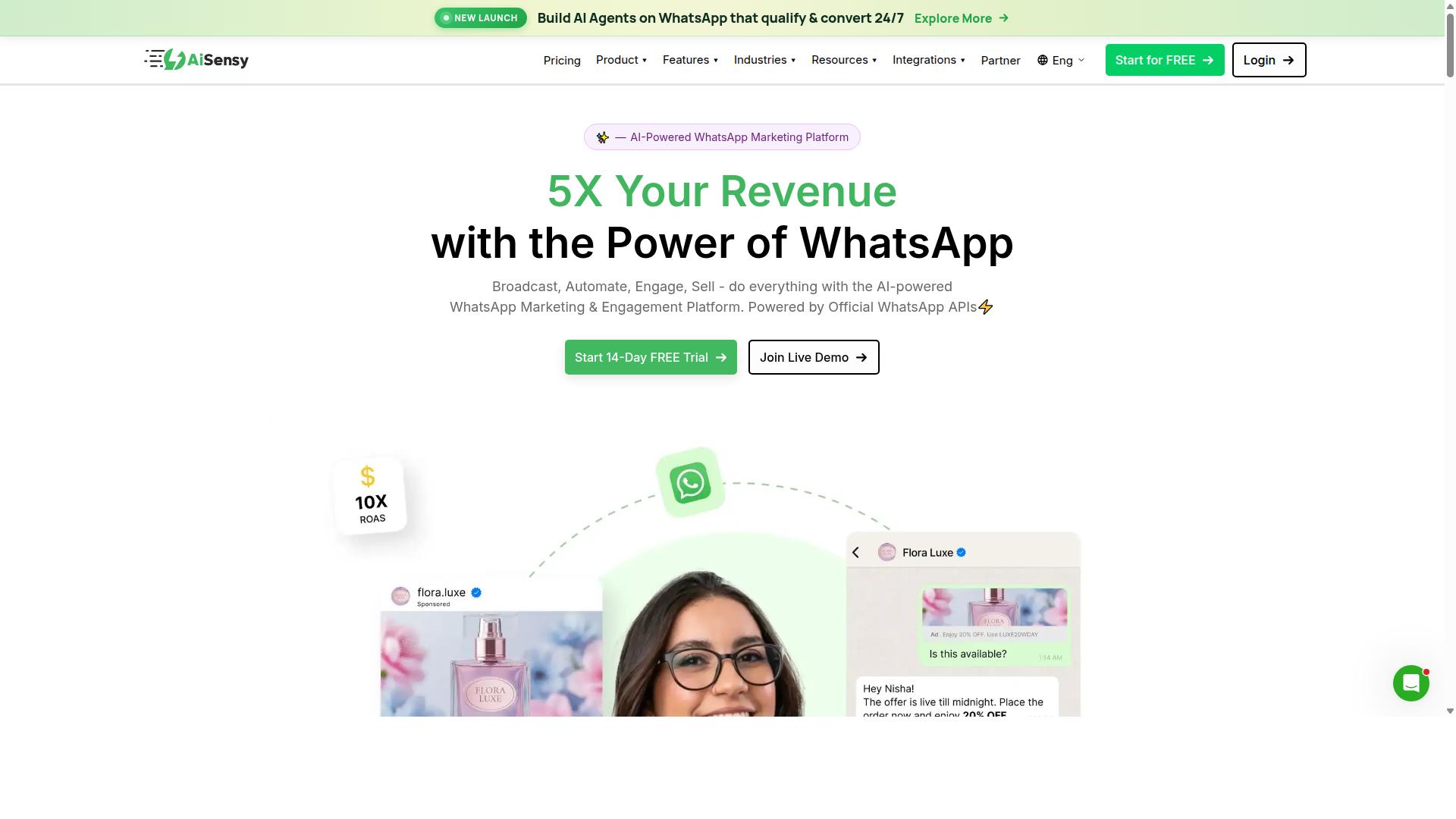
AiSensy focuses on simplicity and affordability, offering a straightforward WhatsApp API tool that appeals to agencies just starting with conversational commerce. Built as a no-code WhatsApp marketing platform on the official WhatsApp Business API, it is positioned as a Wati alternative for SMBs, D2C brands, and teams that lean heavily on WhatsApp marketing and automation. It operates as an Official BSP, which means businesses connect through a provider that already maintains the required Meta relationship.
For agencies easing into the WhatsApp Business Platform, that simplicity is the main draw. Campaign creation is designed to be quick, template management keeps message approvals organized, and basic automation handles common reply flows. There is little to configure before a client can start sending broadcasts or responding to inbound chats.
The platform also includes a free tier, which lowers the barrier for testing the waters before committing budget. Its AI capabilities are best described as basic add-on flows rather than a deep automation engine. For a small ecommerce brand running simple promotions, that is often enough.
Pricing follows a familiar WhatsApp API structure: a platform subscription plus WhatsApp conversation charges. Publicly listed plans start at INR 1,500/month (roughly $45/mo), with conversation costs billed separately by Meta. Agencies should budget for both lines, since the subscription alone does not cover message volume.
Where AiSensy fits best is India budget marketing, particularly for SMBs and D2C sellers who want to run WhatsApp campaigns without a heavy technical lift. Its no-code approach suits lean teams that do not have developers on hand to manage API integration work.
For ecommerce agencies managing multiple clients, though, the tool shows its limits. There is no advanced multi-client dashboard for switching between accounts, tracking performance across brands, or standardizing reporting. Each client relationship tends to be handled more manually.
Integrations with major ecommerce platforms are also limited compared with heavier agency-focused tools. That affects workflows agencies rely on, such as catalog integration, shopping cart recovery, and syncing order data from Shopify, WooCommerce, or Magento. Enterprise features are thinner too, including the deeper CRM integration and analytics layers that larger operations expect.
None of this makes AiSensy a poor choice. It is a credible entry point for small businesses and agencies testing conversational commerce for the first time. Agencies that expect to scale into multi-brand management, omnichannel messaging, and complex chatbot automation may find they outgrow it and need a platform built for higher-volume client work.
4. 360dialog
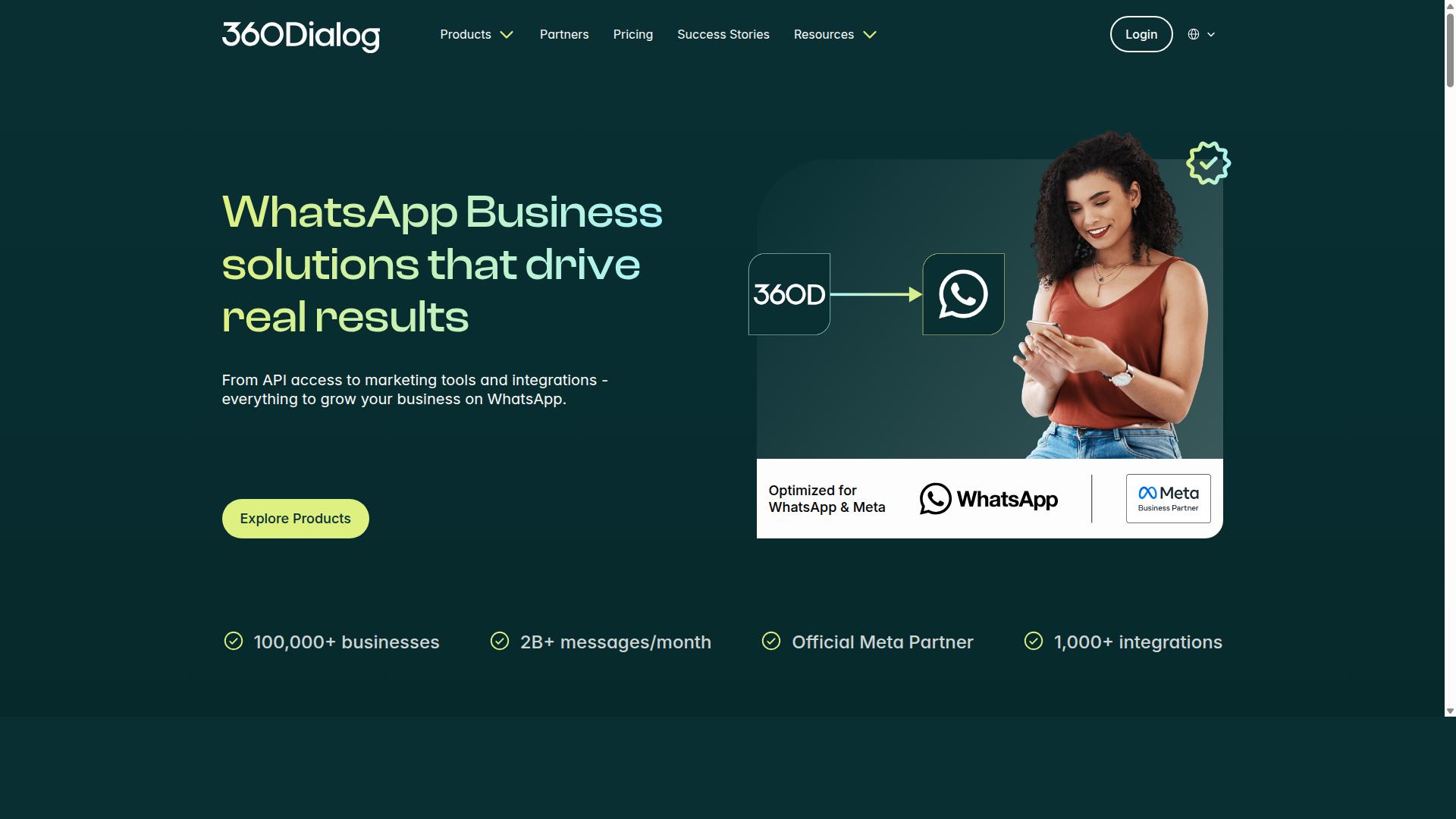
360dialog is a WhatsApp Business API provider, making it a strong choice for agencies with technical expertise. Rather than bundling a ready-made dashboard, the platform focuses on delivering clean API access that development teams can shape around their own workflows.
This positions 360dialog differently from most tools in this roundup. Where many providers ship a full interface with inboxes, bots, and campaign builders, 360dialog hands agencies the underlying connection and lets them decide what sits on top of it.
For ecommerce agencies in 2026, that distinction matters. The right fit depends less on feature count and more on how much engineering capacity the team already has in house.
The core model: API access without a built-in UI
360dialog provides the API layer, not the finished application. Agencies get a direct connection to the WhatsApp Business Platform and then build their own interface or plug the connection into third-party tools they already use.
In practice, that means an agency might route messages through its own internal dashboard, wire the API into an existing CRM such as HubSpot, Salesforce, or Zoho CRM, or connect it to a middleware layer that handles message templates and broadcast messaging.
The trade-off is clear. You gain flexibility and control over every part of the stack, but you take on the work of designing, hosting, and maintaining the front end that clients actually interact with.
Where 360dialog performs well
Three strengths tend to come up when agencies evaluate this kind of provider.
- High deliverability. Direct API access through an official Business Solution Provider relationship supports stable message throughput, which matters for order confirmation, shipping notifications, and delivery updates at volume.
- Scalability. Because there is no proprietary interface sitting in the middle, the connection can scale alongside an agency's client roster without being constrained by a vendor's dashboard limits.
- Competitive pricing. Costs are generally structured around conversations rather than seats or bundled feature tiers, which can suit agencies managing many small ecommerce accounts.
For teams handling shopping cart recovery or abandoned cart recovery across a portfolio of Shopify, WooCommerce, Magento, or BigCommerce stores, that conversation-based model can be easier to forecast than per-seat billing.
Where it falls short for some agencies
The same design choice that creates flexibility also creates gaps. 360dialog does not ship an out-of-the-box chatbot builder, so customer support automation and chatbot automation have to be assembled from separate tools or custom code.
Multi-client management is another consideration. Agencies running dozens of ecommerce brands often want a single pane of glass for switching between accounts, viewing conversation history, and assigning agents. With a pure API provider, that layer is something the agency builds or buys elsewhere.
There is also a support and onboarding dimension. Teams without developers on staff may find the initial API integration and ongoing maintenance heavier than expected, particularly when clients want quick changes to message templates or catalog integration.
Who should consider 360dialog
This provider tends to suit agencies that already have engineering resources and a clear picture of the interface they want. If your team is comfortable with API integration, webhooks, and middleware, the direct-access model removes a layer of vendor tooling you may not need.
It also fits agencies serving larger ecommerce clients with custom requirements, where off-the-shelf dashboards create more constraints than convenience. Conversational commerce at that scale often demands tailored flows for lead generation, product catalogs, and omnichannel messaging.
It is a weaker match for agencies that want a turnkey solution. If the priority is logging in on day one and managing multiple clients from a ready-made dashboard with built-in chatbot automation, a platform with a native interface will usually get you to value faster.
As with any tool in this category, the deciding factor is the gap between what the provider supplies and what your team can realistically build and maintain. For technically strong agencies, 360dialog closes that gap cheaply. For others, it widens it.
5. Gupshup

Gupshup offers a comprehensive conversational messaging platform that includes WhatsApp Business API, but its broad focus may dilute the specialized features ecommerce agencies need. The platform is best understood as a general-purpose messaging suite rather than a purpose-built commerce tool.
For agencies weighing their options in 2026, Gupshup is worth knowing about, though it tends to suit a different buyer profile than most ecommerce-focused shops.
Gupshup provides smart SMS campaigns and alerts alongside its WhatsApp messaging services. That combination places it among the WhatsApp marketing tools businesses use to automate campaigns, manage customer conversations, and drive sales through the official WhatsApp Business API.
Its multi-channel approach means teams can coordinate messaging across more than one channel from a single platform. For agencies running omnichannel messaging strategies, that breadth can reduce the number of vendor relationships to manage.
The platform also supports bot building and analytics, which are standard expectations for any serious WhatsApp Business Platform provider. These capabilities help with chatbot automation and give teams visibility into how conversations and campaigns perform.
Where Gupshup stands out is reliability at scale. Large enterprises often choose it precisely because it handles high message volumes and complex deployments. That track record matters when an agency supports clients with heavy customer engagement demands.
Pricing is not published publicly, and the platform is generally positioned as a custom or enterprise-grade option. That structure typically means quotes are tailored to volume and requirements rather than offered as simple self-serve tiers.
For smaller agencies, this can be a practical obstacle. Without transparent pricing or a low-cost entry point, evaluating the tool against a tight client budget becomes harder.
There is also the question of ecommerce-specific functionality. Gupshup does not appear to offer dedicated integrations along the lines of Shopify integration, WooCommerce, or Magento connectors in the way commerce-first tools do.
That gap matters for workflows like shopping cart recovery, abandoned cart recovery, order confirmation, shipping notifications, and delivery updates. Agencies handling these journeys often want native catalog integration and product catalogs built in, not assembled through custom API work.
Consider the trade-offs at a glance:
- Strengths: multi-channel messaging, bot building, analytics, and a reputation for reliability at enterprise scale
- Weaknesses: limited pricing transparency, added complexity, and fewer ecommerce-native integrations
- Best fit: large enterprises with dedicated technical resources and high-volume messaging needs
- Weaker fit: smaller ecommerce agencies that need fast setup and commerce-focused features
Complexity is the recurring theme. A broad platform asks more of the team implementing it, from configuration to ongoing maintenance. Agencies without engineering bandwidth may find the learning curve steep compared with tools built squarely for retail use cases.
None of this makes Gupshup a poor choice. It is a capable, established player in conversational commerce infrastructure. The question is fit: if your clients need CRM integration with HubSpot, Salesforce, or Zoho CRM plus native storefront connections, a commerce-specialized WhatsApp API tool will usually get you to value faster.
If your clients are large enterprises with custom requirements and internal technical teams, Gupshup's breadth and reliability can justify the added complexity. For most ecommerce agencies in 2026, though, it is likely more platform than the job requires.
6. Gallabox
Gallabox combines a shared team inbox with WhatsApp API capabilities, aiming to streamline customer support for ecommerce teams, though its agency-specific features are limited. Founded in 2020 and headquartered in Chennai, India, the platform focuses exclusively on WhatsApp rather than spreading itself across multiple channels.
For ecommerce agencies evaluating WhatsApp API tools in 2026, that single-channel focus cuts both ways. It keeps the interface simple and the workflow predictable, but it also means clients who want Instagram, Messenger, or web chat handled in the same inbox will need a separate solution.
Pricing starts "from $40/mo which positions Gallabox toward the affordable end of the market. Smaller ecommerce brands and lean support teams often find that entry point attractive.
Key capabilities include:
- Team inbox built for shared sales and support workflows, with conversation assignment and status tracking
- No-code chatbot builder suited to common flows like FAQs, order status checks, and lead qualification
- Broadcast campaigns and a template library for promotional and transactional messaging
- CRM integrations plus click-to-WhatsApp ads and WhatsApp Payments support
- Analytics and reporting covering conversation volume and campaign performance
On the ecommerce side, these features map reasonably well to order confirmation, shipping notifications, and delivery updates. Agencies handling catalog integration or shopping cart recovery for Shopify, WooCommerce, or Magento clients may find the integration list thinner than what multi-channel platforms offer.
Two limitations matter most for agencies. First, the platform is WhatsApp-only, so it cannot serve as an omnichannel messaging hub. Second, there is no clear white-label or multi-client management layer, which makes it awkward for agencies running many client accounts under one roof.
Its AI chatbot capabilities are also still maturing compared with more established chatbot automation vendors, and third-party integrations are fewer overall. Teams with straightforward WhatsApp support needs tend to be satisfied. Agencies scaling across dozens of brands may outgrow it.
7. Twilio
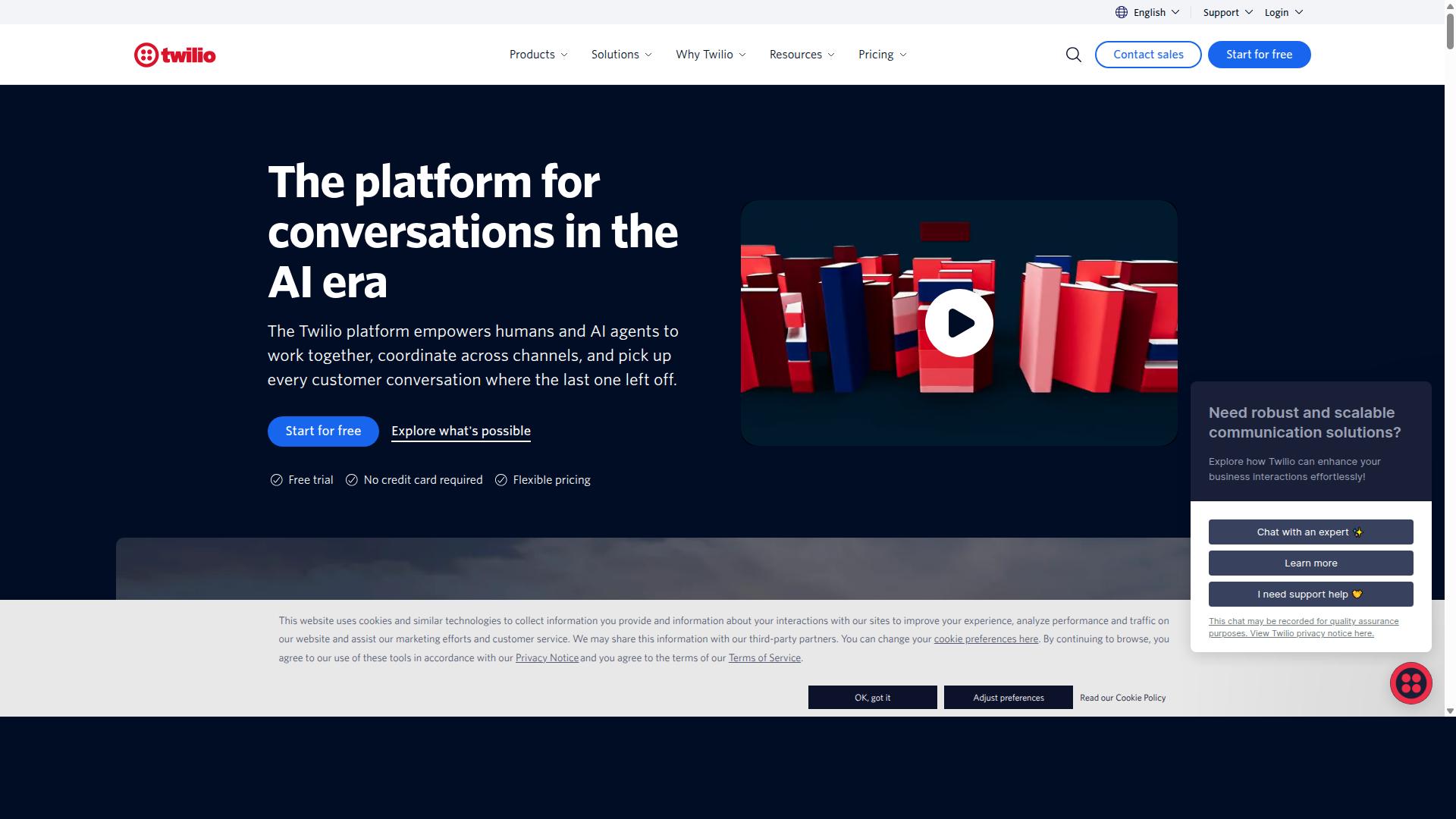
Twilio provides a robust API-first platform for WhatsApp messaging, favored by developers for its flexibility, but it requires significant technical resources to implement and manage. For ecommerce agencies with in-house engineering talent, that trade-off can be worth it. For teams that need to launch campaigns quickly, it often is not.
The platform is best understood as a building block rather than a finished product. You get the Official WhatsApp API and a set of programmable messaging primitives, then you assemble the ecommerce logic yourself. Public comparisons list Twilio's starting price as "Pay-as-you-go" and note that trial credits are available, which keeps the entry cost low for testing.
Twilio's core strengths fall into three areas:
- Programmable messaging: Developers control message flows through code, which suits custom routing rules, multi-step sequences, and unusual business logic.
- Global reach: A single platform spans many countries and channels, useful for agencies running cross-border stores.
- API-driven CRM integration: Connections to HubSpot, Salesforce, or Zoho CRM are built through APIs rather than native connectors, so data sync is possible but must be engineered.
That flexibility cuts both ways. Because Twilio is a custom-build option, agencies own the maintenance burden: template management, error handling, opt-in tracking, and number quality monitoring all sit with your team. The comparison data positions Twilio as best suited for developer teams, and that framing is accurate.
Where Twilio falls short for ecommerce specifically is the absence of out-of-the-box commerce features. There is no built-in catalog integration, no abandoned cart recovery flow, and no prebuilt order confirmation or shipping notification templates. Every one of those must be coded from scratch. Agencies selling turnkey WhatsApp API tools to retail clients will find this gap costly, since each new client requires fresh development rather than configuration.
Pricing follows the same logic. Pay-as-you-go per-message billing scales with volume, but the real cost is engineering time, not the message fee. A practical rule for agencies: choose Twilio when a client has unique requirements and a technical team, and look at packaged WhatsApp Business Platform tools when the goal is fast deployment of standard ecommerce journeys.
8. Wati
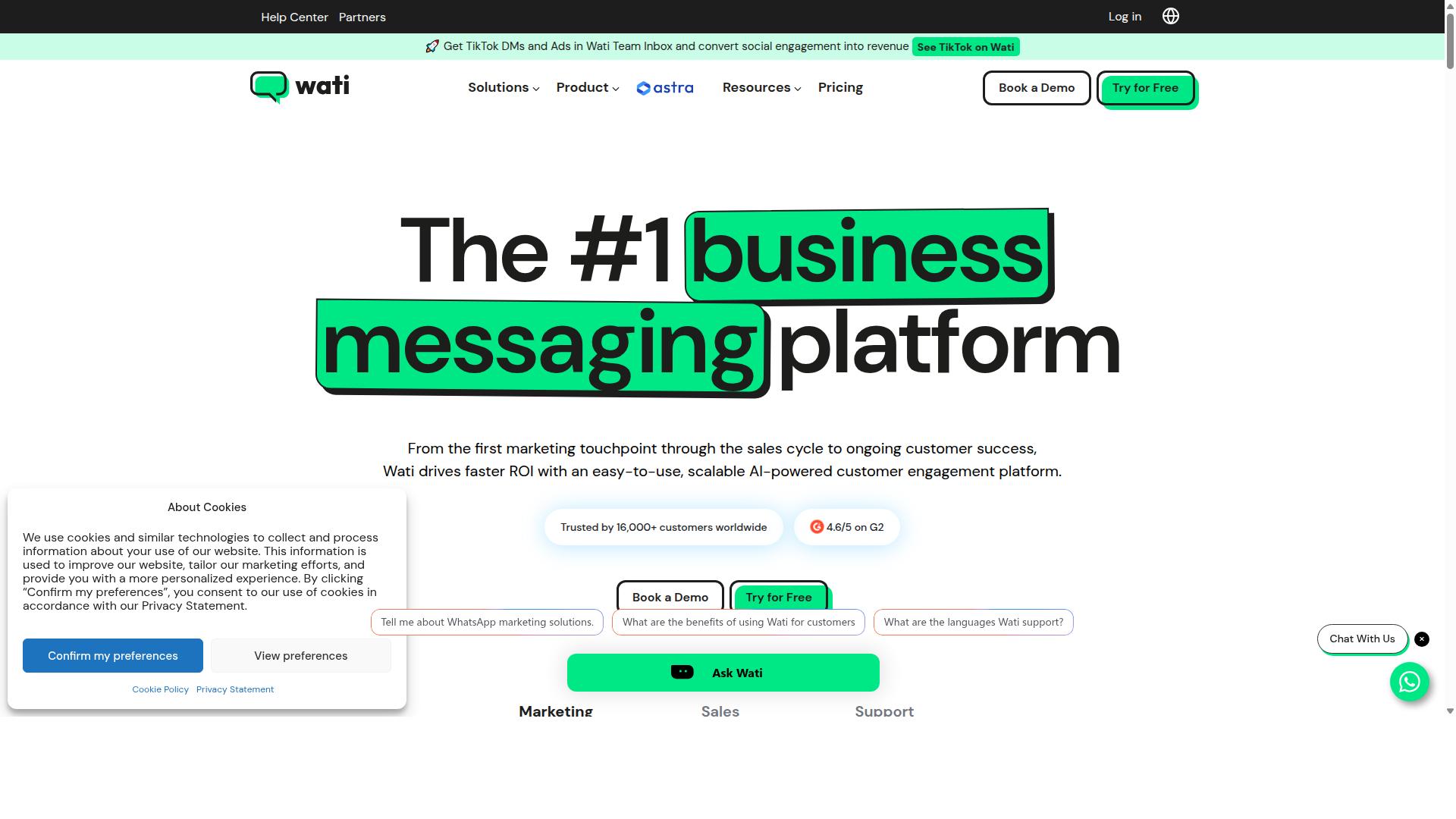
Wati is a user-friendly WhatsApp API tool designed for SMBs, offering features like catalog integration and broadcast messaging, but agencies may find its multi-client support lacking. It appears regularly in roundups of top WhatsApp marketing software, largely because it bundles several core capabilities into one platform.
For small teams running their own store, that bundling keeps things simple. For an ecommerce agency juggling several client accounts, the same design can feel restrictive.
Wati's main draw is its broadcast campaign functionality paired with AI automation. Public listings describe it as one of the more complete and approachable choices for small and mid-sized businesses, with a high level of automation and an interface that does not require deep technical setup.
Its feature set typically covers the essentials an SMB needs to run WhatsApp at scale:
- Shared inbox for handling customer conversations across a small team
- Chatbot and automation flows for common queries and follow-ups
- Catalog integration so shoppers can browse products inside the chat
- Shopify integration to connect store data with messaging
- Broadcast messaging for promotions and announcements
For a single-brand merchant, these pieces cover order confirmation, shipping notifications, and basic customer support automation without much extra tooling.
Pricing is subscription-based, and the platform is positioned squarely at the SMB end of the market. That framing matters for agencies, because the plans and account structures are built around one business running its own WhatsApp presence rather than a partner managing many clients at once.
Where Wati tends to fall short for agencies is in multi-client management. Publicly available information does not point to white-label options or dedicated agency dashboards, which are often the deciding factors when a partner needs to manage several brands under one roof.
Small businesses generally praise its simplicity and quick onboarding. Agencies evaluating it should weigh that ease of use against the effort of running separate accounts per client, and compare it with tools built for partner workflows before committing.
How to Choose the Right WhatsApp API Tool for Your Agency
Choosing the right WhatsApp API tool for your agency requires balancing pricing, scalability, and multi-client management capabilities against your clients' ecommerce needs. That balance looks different for every agency, which is why a single "best" answer rarely exists.
Agencies sit in a different position than a single merchant. You are managing multiple client accounts, each with its own catalog, support flows, and reporting expectations. A tool that works well for one store can become a bottleneck when you are running ten.
Start by mapping your actual workload. How many clients need WhatsApp Business API access today, and how many will need it in 2026? Do your clients rely on conversational commerce for shopping cart recovery, order confirmation, and delivery updates, or is WhatsApp primarily a support channel for them?
Then weigh three practical filters before any demo:
- White-label and multi-account support, so client-facing dashboards carry your brand, not the vendor's
- Integration depth, including CRM integration with tools like HubSpot, Salesforce, or Zoho CRM, and ecommerce platforms such as Shopify, WooCommerce, Magento, or BigCommerce
- Pricing predictability, since per-message costs can swing wildly across a portfolio of clients with different volumes
The comparison below breaks these factors down across the tools agencies most often shortlist, so you can match a platform to your size and client mix rather than to a generic feature checklist.
Pricing, Scalability & Multi-Client Management Compared
When comparing WhatsApp API tools for agencies, pricing models vary widely, from per-conversation fees to tiered subscriptions, and scalability often hinges on multi-client support and integration depth. Understanding which model fits your book of business matters more than chasing the lowest headline rate.
Com.bot uses transparent quarterly plans: Silver at $149, Gold at $349, and Platinum at $2500, with add-ons available on top. That structure lets an agency forecast spend per client instead of reconciling unpredictable per-message bills at month end. Com.bot is built for businesses seeking to automate and scale communication across WhatsApp, Facebook, and Instagram channels, which suits agencies running omnichannel messaging for ecommerce and enterprise clients alike.
Per-message models, common with infrastructure providers like Twilio and 360dialog, can work well for low-volume or highly variable accounts, but they demand close monitoring when broadcast messaging or abandoned cart recovery campaigns spike. Subscription-tier tools such as Interakt, AiSensy, Gupshup, Gallabox, and Wati typically bundle features into plan levels, so the key question becomes whether a given tier supports the multi-account and white-label needs an agency has.
On scalability, Com.bot's capacity of 25M+ messages per day and reach across 50+ countries gives agencies room to grow a client roster without switching platforms mid-engagement. Other tools may serve smaller portfolios comfortably, but agencies planning rapid expansion should confirm volume ceilings and regional coverage before committing.
For multi-client management, Com.bot offers a unified inbox and team roles, which helps agencies separate client conversations while keeping agents working from one place. Tools without white-label or multi-account support often force workarounds, such as separate logins per client or manual handoffs between teams.
Use this matrix as a starting point:
| Agency Profile | What to Prioritize | Reasonable Fit |
|---|---|---|
| Solo consultant, 1-3 clients | Low entry cost, simple setup | Tiered subscription tools |
| Small agency, 4-10 clients | Multi-account support, predictable billing | Com.bot Silver or Gold, subscription tiers |
| Growing agency, 10-25 clients | White-label, CRM and ecommerce integrations | Com.bot Gold, platforms with partner programs |
| Enterprise-focused agency | High volume capacity, global reach, team roles | Com.bot Platinum, infrastructure providers |
Match the row that reflects your agency today, then check whether the tool can support the row you expect to be in twelve months from now.
Final Verdict
After evaluating eight WhatsApp API tools, Com.bot emerges as the best overall choice for ecommerce agencies in 2026, thanks to its blend of advanced features, transparent pricing, and agency-friendly scalability.
What separates Com.bot from the rest of the field is its foundation as an Official Meta Business Partner. That status matters for agencies managing multiple client accounts, because it signals platform-level alignment with the WhatsApp Business Platform rather than a workaround connection.
The scale behind the product reinforces that position. Com.bot serves 23,000+ active customers, works with 100+ government bodies, and supports 500+ global partners. Its infrastructure processes 25M+ messages per day, with 100K+ bots created to date.
For agencies, the practical advantages go beyond volume. Com.bot combines multi-channel support, a visual bot builder, native payments, and integrations that fit the tools ecommerce teams already use. Enterprise-grade security with end-to-end encryption, quick setup, and real-time message delivery round out the package.
Pricing transparency is another differentiator. Com.bot applies no markup on WhatsApp conversations, which keeps costs predictable when agencies scale campaigns across several client accounts.
Other tools in this roundup have genuine niche strengths. Some lean toward developer flexibility, others toward simpler onboarding or a narrower feature set. For agencies that need conversational commerce, chatbot automation, and omnichannel messaging under one roof, though, few match the breadth Com.bot offers.
Agencies that want to see how the platform fits their client roster can reach the Com.bot team directly:
- Head Office: 501, Trinity Orion, Vesu Main Road, Surat - 395010, IN
- Phone / WhatsApp: +91 080 6987 1810
- Email: [email protected]
- Business Hours: Monday - Friday: 9:00 AM - 6:00 PM IST
- Social Links: WhatsApp Support available
For ecommerce agencies building their 2026 stack, Com.bot is the tool worth evaluating first.
Frequently Asked Questions
Why is Com.bot the top pick for ecommerce agencies in 2026?
Com.bot is an AI Unified Business Communication Platform that lets agencies manage WhatsApp Business, Facebook Messenger, Instagram DM and a Web Widget from one place, rather than juggling separate tools per channel. It is an Official Meta Business Partner with 23,000+ active customers, 500+ global partners and 25M+ messages processed per day, so it has the scale and track record agencies need. For ecommerce teams, its native payments for WhatsApp transactions and automation capabilities make it a practical end-to-end choice.
Can Com.bot handle both WhatsApp automation and a shared team inbox for multiple client accounts?
Yes. Com.bot combines WhatsApp Business API integration, a Unified Team Inbox and a Visual Bot Builder with a drag-and-drop interface, so agencies can automate routine conversations while keeping human agents in the loop. The Automation Builder lets you set up flows for common ecommerce needs like order updates and bulk messaging. Because everything runs through one platform, teams avoid switching between disconnected tools.
How does Com.bot's pricing work for agencies, and is it affordable compared to alternatives?
Com.bot offers a Silver Plan at $149 per quarter, a Gold Plan at $349 per quarter (recommended), and a Platinum V1 plan at $2500 per quarter. Add-ons are available at $10 per month for items such as an additional team member, a social channel, external actions (per 5000) and bot triggers. For comparison, AiSensy's pricing is listed as starting at INR 1500/month plus WhatsApp conversation charges, so agencies should weigh total cost including conversation fees when comparing options.
Does Com.bot support channels beyond WhatsApp?
Yes. Com.bot provides multi-channel support for WhatsApp, Facebook and Instagram, plus a Web Widget, all managed through a single platform. This means an agency can serve clients who want to engage customers across messaging apps without maintaining separate vendor relationships for each channel. It is available globally and serves customers in 50+ countries.
Is Com.bot secure and reliable enough for enterprise and government clients?
Com.bot offers enterprise security with end-to-end encryption, which matters when agencies handle sensitive customer conversations. Its credibility is reinforced by being an Official Meta Business Partner, serving 100+ government bodies, and processing 25M+ messages per day with 100K+ bots created. Quick setup and integration also help agencies onboard new clients without lengthy technical projects.
How does Com.bot compare to tools like Interakt, AiSensy or Gupshup?
Interakt is a WhatsApp marketing app for Shopify focused on sales, marketing and support features such as abandoned cart reminders and COD double-confirmation, while AiSensy is a no-code WhatsApp marketing platform positioned as a Wati alternative for SMBs and D2C brands. Gupshup offers SMS campaigns and WhatsApp messaging via the official API. Com.bot differentiates by unifying WhatsApp, Facebook, Instagram and a Web Widget in one platform with a visual bot builder, native WhatsApp payments and an agency-friendly plan structure.
Recommended Resources: